
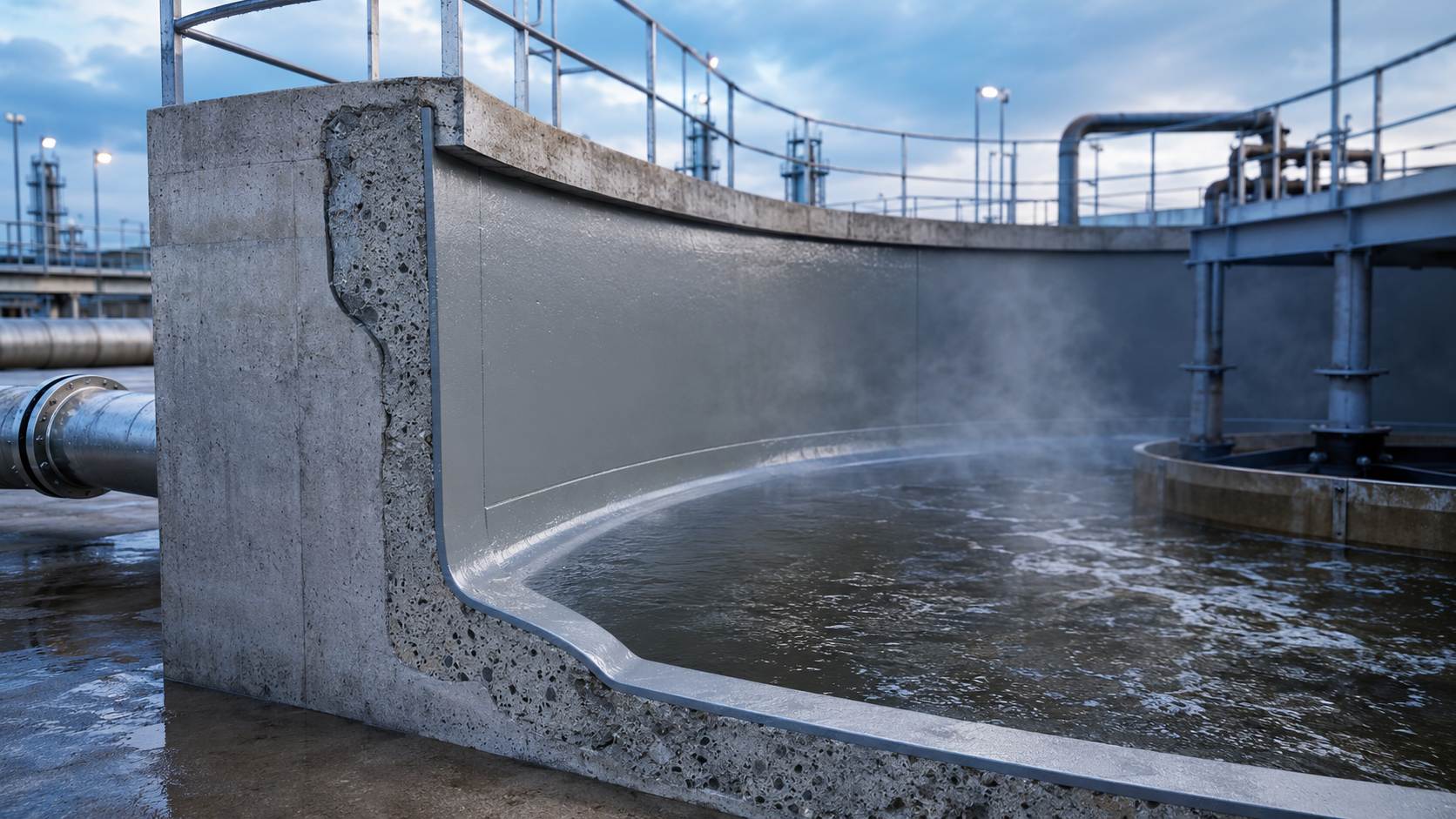
Corrosion caused by hydrogen sulfide (H₂S) is a widespread and costly problem in wastewater treatment plants. In the tanks where wastewater is stored under anaerobic conditions, H₂S is produced as a gas. Upon contact with oxygen in the air, this gas is then immediately oxidized to sulfuric acid. This acid attacks the concrete surfaces of the tanks and can cause severe damage in the form of spalling and cracking. In the process of attack by H₂S-oxidation products on concrete, the calcium hydroxide in the concrete is attacked by the acidic solution is dissolved, resulting in a decrease in pH and the leaching of important binding compounds from the concrete. In the long run, tanks not protected against corrosion will reach the end of their designed service life at an earlier point in time and will require expensive repairs during the service life. To prevent such problems and to ensure cost-effective operation of wastewater treatment plants over the long term, the use of effective corrosion protection measures is necessary in order to extend the service life of tanks and to maintain their performance.
The Role of Concrete Protective Liners (CPL) in Modern Wastewater Systems
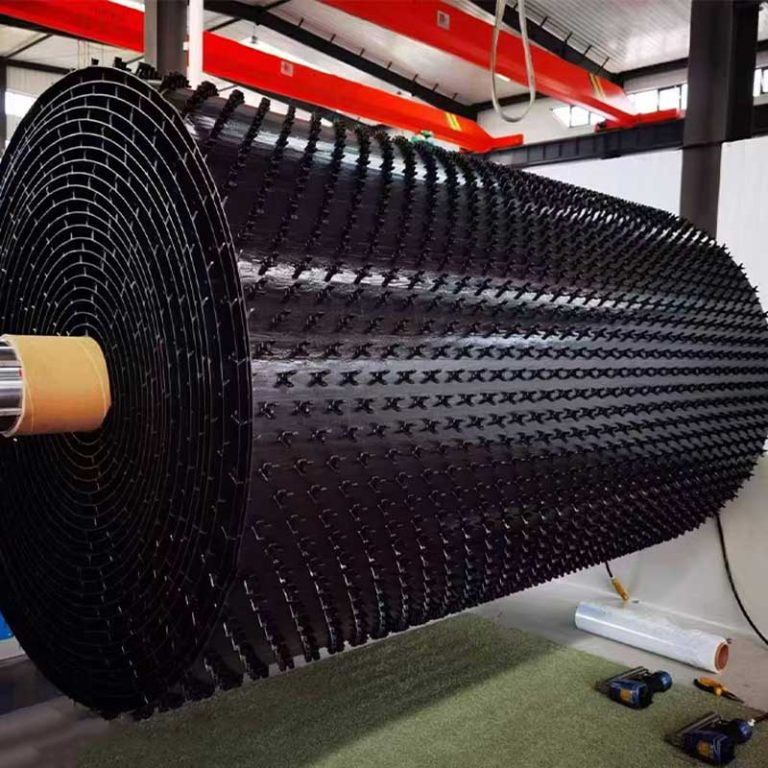
In modern wastewater management, Concrete Protective Liners (CPL) have become an indispensable component for corrosion mitigation. Acting as both physical and chemical barriers, CPL systems prevent aggressive media from contacting concrete substrates directly. Their advanced polymer compositions—such as HDPE, PP, or PVC—offer superior resistance against acids, alkalis, sulfides, and microbial degradation. These liners not only enhance durability but also maintain structural integrity under fluctuating mechanical stresses. As a result, the adoption of CPL technology has evolved from an optional measure to a standard engineering practice for ensuring long-term protection in wastewater treatment environments.
How Does H₂S Corrosion Affect Concrete in Wastewater Tanks?
Before we discuss solutions such as CPL corrosion protection, it is first important to understand how H₂S corrosion develops and affects concrete structures.
Mechanisms of H₂S Generation and Oxidation
H₂S is produced primarily through the metabolic activity of sulfate-reducing bacteria thriving under anaerobic conditions within sewage systems. When this gas migrates into aerobic zones near tank surfaces or headspaces, it undergoes oxidation into sulfuric acid (H₂SO₄). This acid aggressively attacks calcium compounds within concrete, leading to decalcification and softening of the surface layer. The lowered pH further accelerates dissolution processes, ultimately compromising the concrete’s protective passive film around embedded steel reinforcement.
Structural and Operational Consequences of Corrosion
The progressive loss of material integrity due to H₂S-induced corrosion results in several detrimental outcomes. Structurally weakened sections can no longer withstand hydraulic pressures or mechanical loads effectively. Increased porosity from acid attack allows deeper penetration of corrosive agents and microorganisms, amplifying internal damage. Operationally, facilities face unplanned downtime for repairs involving specialized restoration techniques such as polymer mortar resurfacing or full liner replacement—both costly and time-consuming interventions that disrupt treatment continuity.
Why Is CPL an Effective Solution Against H₂S Corrosion?
CPL’s comprehensive defense system utilizes advanced material science to counterattack the destructive process.
Material Composition and Performance Characteristics of CPL
Concrete Protective Liners are generally made of thermoplastic such as high-density polyethylene (HDPE), polypropylene (PP) and polyvinyl chloride (PVC). These liners are chemically inert to strong acids such as sulfuric acid and which are produced by the H₂S oxidation. These liners are flexible and they can withstand some movement of the structure in which they are placed. Large tanks are subject to thermal and hydrostatic change. These change can cause the concrete to crack or the liner to delaminate. The smooth surface of the liner also reduces the potential for biofilm to form, thereby minimizing the chance for microbial-induced corrosion.
Mechanisms of Protection Provided by CPL
Once properly installed, CPLs perform a number of protective functions to protect concrete substrates from chemical attack.
Physical Barrier Function
The main defense mechanism offered by CPL is to prevent any concrete surface from coming into contact with corrosive gases and/or liquids. CPL creates an impermeable layer between the condensates of sulfuric acid and the concrete, thereby preventing any degradation caused by the diffusion of the corrosive substances into the main body of the concrete. Thus, even in environments that are chemically active, the original mechanical properties of the structure will be preserved over time.
Chemical Resistance Properties
In addition to physically separating gas from liquid, CPL barrier materials are chemically stable to prevent reaction with hydrogen sulfide gas or other acidic liquid condensates. The non-reactive polymer backbone does not swell or soften when exposed to other aggressive chemicals. As a result, the material maintains its physical dimensions and bonds to other materials for extended periods of time, providing consistent long-term protection.
How Is CPL Installed in Wastewater Treatment Tanks?
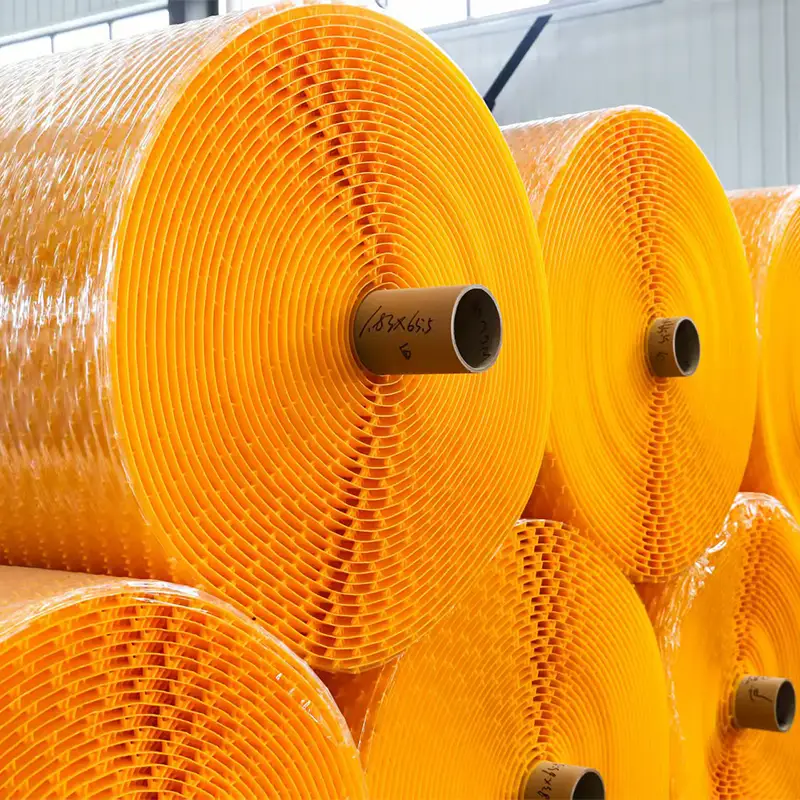
The method of installation of a CPL system will affect the longevity and sealing performance of the system.
Integration During New Construction Projects
New tanks can be equipped with liners which are anchored in the formwork prior to concrete casting by means of integrated studs or mechanical locking profiles on the reverse side of the liner. In the hardened state, the anchors are embedded in the concrete and any changes in pressure are prevented from causing the liner to detach. Adjacent liner sheets are hot-wedge-welded together after casting to form homogeneous seams which are completely impermeable. In particular, the edge area must be given special consideration when forming corners or penetrations as these are areas where leaks can occur.
Retrofitting Existing Concrete Structures with CPL Systems
When applied to existing tanks suffering from partial deterioration, retrofitting begins with thorough surface preparation—removing loose material layers and repairing cracks using compatible mortars. Depending on design requirements, liners may be fixed mechanically through anchor bolts or bonded using high-strength adhesives formulated for wet environments. Post-installation quality control includes spark testing for seam tightness verification and peel tests assessing adhesion strength across representative sections.
What Are the Long-Term Benefits of Using CPL for Corrosion Protection?
CPL systems provide significant advantages over conventional coating systems, particularly in terms of durability and operational cost.
Durability and Maintenance Efficiency Gains
By preventing chemical ingress entirely rather than merely resisting it superficially, CPL significantly slows down degradation kinetics within reinforced concrete substrates. This prolongs service life by decades while minimizing periodic maintenance interventions such as recoating or patching operations common with epoxy-based alternatives. Facilities benefit from enhanced reliability since consistent chemical resistance translates into stable hydraulic performance throughout continuous operation cycles.
Economic and Environmental Advantages
Cost Optimization Over Lifecycle
While initial costs of installing a coating system may be higher than that of a traditional coating system, life cycle cost analysis will show that costs will be reduced by less repairs and down time for maintenance. Improved operational availability will also result in better plant productivity and avert sudden and unforeseen expenditure due to tank failures.
Sustainability Contributions
From an environmental perspective extending the life of existing assets is good for the environment as it reduces the demand for new raw materials required for new construction projects. It also reduces the projects carbon footprint as a large part of a buildings carbon footprint is made up of the cement used in its construction. The latest polymer materials used in CPLs have excellent environmental durability and do not release any detrimental substances during their usage.
Why Choose Shandong Ruinato Environmental Protection Technology Co., Ltd.?
Shandong Ruinato Environmental Protection Technology Co., Ltd. of China is one of the leading suppliers of specialized Concrete Protective Liners for wastewater treatment all over the world. The wide selection of Concrete Protective Liners by Ruinato are all HDPE-anchored which are ideal to fight hydrogen sulfide induced corrosion in sewage plants. Each production batch of Concrete Protective Liners is put through a series of strictly controlled laboratory tests such as tensile tests, weldability tests on mock up sections as well as tests on chemical resistance in order to check that all the products fully comply with a number of international quality standards including ISO 9001:2015. All the Concrete Protective Liners produced by Ruinato are characterized by uniform thickness and by precise anchoring geometries in order to guarantee perfect watertightness of the system. In addition to the production of Concrete Protective Liners, Ruinato is also able to supply a complete service of engineering design, optimization and development and on site technical assistance in order to ensure perfect installation of the system whether it is used for new constructions or for the upgrading and/or retrofitting of existing structures.
Conclusion
Employing Concrete Protective Liners represents a strategic advancement toward achieving sustainable resilience within wastewater treatment infrastructure exposed to H₂S-induced corrosion threats. Through material innovations leveraging robust thermoplastics combined with meticulous installation practices guided by experienced manufacturers like Shandong Ruinato Environmental Protection Technology Co., Ltd., operators can realize extended asset longevity while maintaining operational efficiency at reduced lifecycle costs.
FAQs
1.What factors should be considered when selecting a CPL material for wastewater treatment tanks?
Key considerations include chemical compatibility with anticipated contaminants such as sulfuric acid concentrations derived from H₂S oxidation processes; temperature tolerance; mechanical flexibility accommodating thermal expansion; weldability during field assembly; and proven long-term immersion stability verified through standardized testing protocols.
2. How often does one perform the inspection or maintenance of the installed CPL system?
For the CPL systems, which have been installed, it is advisable to perform the routine checkup on a 6–12 month basis in order to be able to recognize early on the mechanical wear and tear and the seam separation, caused by the operational stress. Detailed checkup should be performed every few years, depending on the severity of the exposure to stress, within the process configuration of the respective facility.
3.Can CPL be used for other structures than wastewater tanks?
Yes, Concrete Protective Liner technology can be used successfully for tunnels with the risk of infiltration of groundwater, for biogas digesters that are operating under corrosive methane-sulfide-atmospheres, for secondary containment structures for industrial effluents as well as for storage of chemicals that require long-term assurance of containment by a robust structure also against aggressive reagents.