Featured-Products

custom carbon fiber products

Carbon fiber composite materials products Carbon fiber composite materials products1 Carbon fiber composite materials products3

custom carbon fiber products

Share to

Facebook
WhatsApp
LinkedIn

Color:

White

circle-fill (1)

Black

Yellow

circle-fill (3)

Red

circle-fill (4)

Green

circle-fill (5)

Blue

circle

Customizable

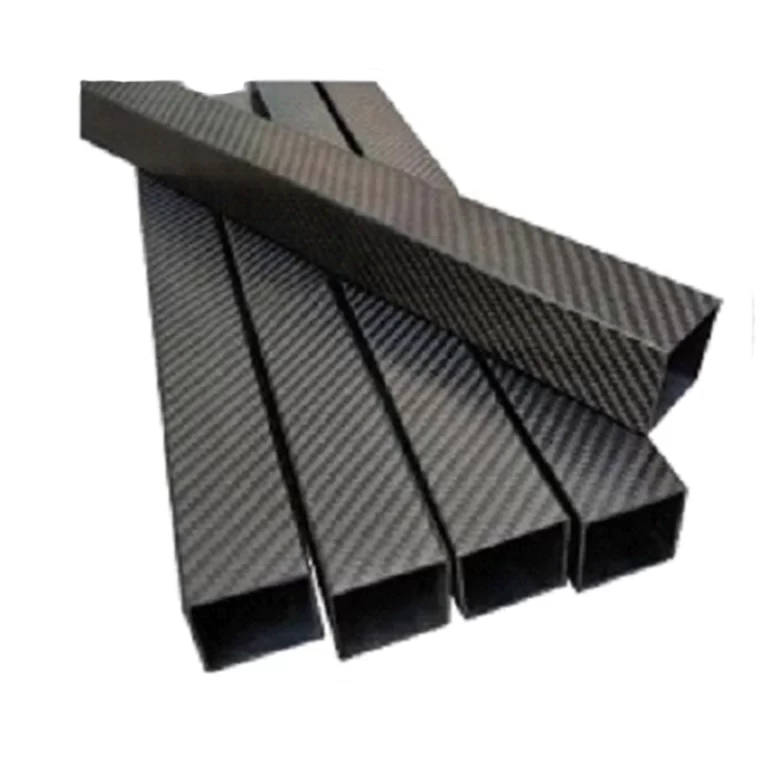
Carbon fiber is a fibrous material composed of carbon elements, characterized by its lightweight, high strength, corrosion resistance, high modulus, and low coefficient of thermal expansion. custom carbon fiber products possess excellent mechanical properties. Its tensile strength is higher than that of steel, and it also has a high modulus of elasticity, making carbon fiber products less prone to deformation under external forces.

custom carbon fiber products suitable for various construction environments

Product Uniqueness

Product Uniqueness: Showcase the product’s core selling points, highlighting them based on the product’s specific characteristics, emphasizing its technical features, design details, and physical properties.

1. Ultra-high specific strength/specific modulus: Strength far exceeds that of steel, while density is only about one-quarter that of steel. It ensures structural stability while reducing weight, making it a core material for lightweight design.

2. Excellent corrosion resistance: Rust-free and resistant to acid, alkali, and salt corrosion, it can withstand harsh environments such as marine salt spray and chemical media for extended periods, significantly reducing maintenance costs.

3. Fatigue and creep resistance: Not easily damaged under high-frequency alternating loads, and does not exhibit significant deformation under long-term stress, with a service life far exceeding that of traditional metal materials.

4. High design flexibility: The mechanical performance requirements of different scenarios can be precisely matched by adjusting the carbon fiber layup direction, number of layers, and matrix resin type.

5. Low thermal conductivity & adjustable electrical properties: Possesses good thermal insulation properties and can be modified to achieve electrical or insulating properties, making it suitable for special applications such as aerospace and electronic equipment.

Technical parameters

Comparison Dimensions Carbon fiber composite materials Traditional metal materials (steel/aluminum) Summary of core advantages
Weight and strength Its specific strength is 5-8 times that of steel and 3-5 times that of aluminum, resulting in significant lightweighting. High strength but also high density, resulting in a weight far exceeding that of composite materials for the same strength. Weight reduction without sacrificing effectiveness, suitable for weight-sensitive scenarios.
Corrosion resistance Rust-free, resistant to acids, alkalis, and salt spray, with no risk of electrochemical corrosion. Steel is prone to rust, and aluminum is prone to oxidation, both requiring regular anti-corrosion treatment. Adaptable to harsh environments, significantly reducing subsequent maintenance costs.
Fatigue resistance It is less prone to cracking under alternating loads, and its fatigue life is several times that of metals. Long-term stress can easily lead to metal fatigue and crack propagation. Improve product durability and extend service life
Design flexibility Mechanical properties can be customized through layer design, enabling the integral molding of complex structures. Shape is limited by processing technology; complex structures require the assembly of multiple parts. Simplify production processes and reduce assembly steps
Thermal insulation & electrical performance Low thermal conductivity, modifiable to achieve bidirectional control of conductivity/insulation. Steel is a good conductor of both heat and electricity, while aluminum has extremely high thermal conductivity. Adaptable to special functional requirements in aviation, electronics, and other fields.
Vibration Damping Rapid vibration decay and good noise reduction and vibration damping effects It has strong vibration conductivity and is prone to resonance. Improve equipment operational stability and user comfort

1. Aerospace Grade (Epoxy Resin-based T700 Carbon Fiber Composite Material)

> Tensile Strength: 3000–3500 MPa

> Elastic Modulus: 230–240 GPa

> Density: 1.5–1.6 g/cm³

> Elongation at Break: 1.5%–1.7%

> Suitable Environment: -50℃~120℃, resistant to high-altitude radiation and low air pressure

2. Wind Turbine Blade Grade (Vinyl Ester Resin-based T300 Carbon Fiber Composite Material)

> Tensile Strength: 2000–2500 MPa

> Elastic Modulus: 200–210 GPa

> Density: 1.6–1.7 g/cm³

> Flexural Strength: 1800–2200 MPa

> Suitable Environment: -40℃~80℃, resistant to UV radiation and salt spray corrosion

3. Sporting Goods Grade (Phenolic Resin-based T800) Carbon fiber composite material

> Tensile strength: 3800–4200 MPa

> Elastic modulus: 290–300 GPa

> Density: 1.4–1.5 g/cm³

> Impact strength: 200–250 kJ/m²

> Applicable environment: Normal temperature (-10℃~50℃), resistant to high-frequency impact and bending


Application areas Carbon fiber grades Matrix resin
Aerospace T700 Epoxy resin
Wind turbine blades T300 Vinyl ester resin
sporting goods T800 Phenolic resin
Automotive lightweighting T700S Unsaturated polyester resin
Marine Engineering M40J Epoxy resin (corrosion resistant type)

Product Advantages

First, its lightweight design significantly reduces structural mass and improves operational efficiency.

Second, its high strength and high modulus ensure the stability and reliability of structural performance.

Third, its excellent fatigue resistance extends the product’s service life.

Fourth, its highly customizable design allows for tailored solutions to specific needs.

Fifth, its corrosion and wear resistance makes it suitable for various harsh environments.

Carbon fiber composite materials products

Product application scenarios

Frequently Asked Questions

In fields with long service cycles such as aviation, wind power, and marine engineering, its service life can reach 20-30 years, far exceeding that of traditional metal materials. The later maintenance cost is extremely low, which can completely offset the high initial procurement cost. However, it may not be cost-effective for small civilian parts used for short periods of time.
Yes, but diamond tools and low-speed machining are required to avoid the high temperature generated by high-speed cutting from burning the resin matrix. Dust prevention measures should be taken during processing, as carbon fiber dust is fine and easily adsorbed, so protective equipment must be worn.

Related products

We look forward to working with you to create value together

It’s a pleasure to meet you! Whether you want to learn more about our products, inquire about our service process, or have any questions or feedback, please feel free to “find” us. We will listen attentively to every voice and promptly answer your questions and provide assistance.

Send Enquiry Now