
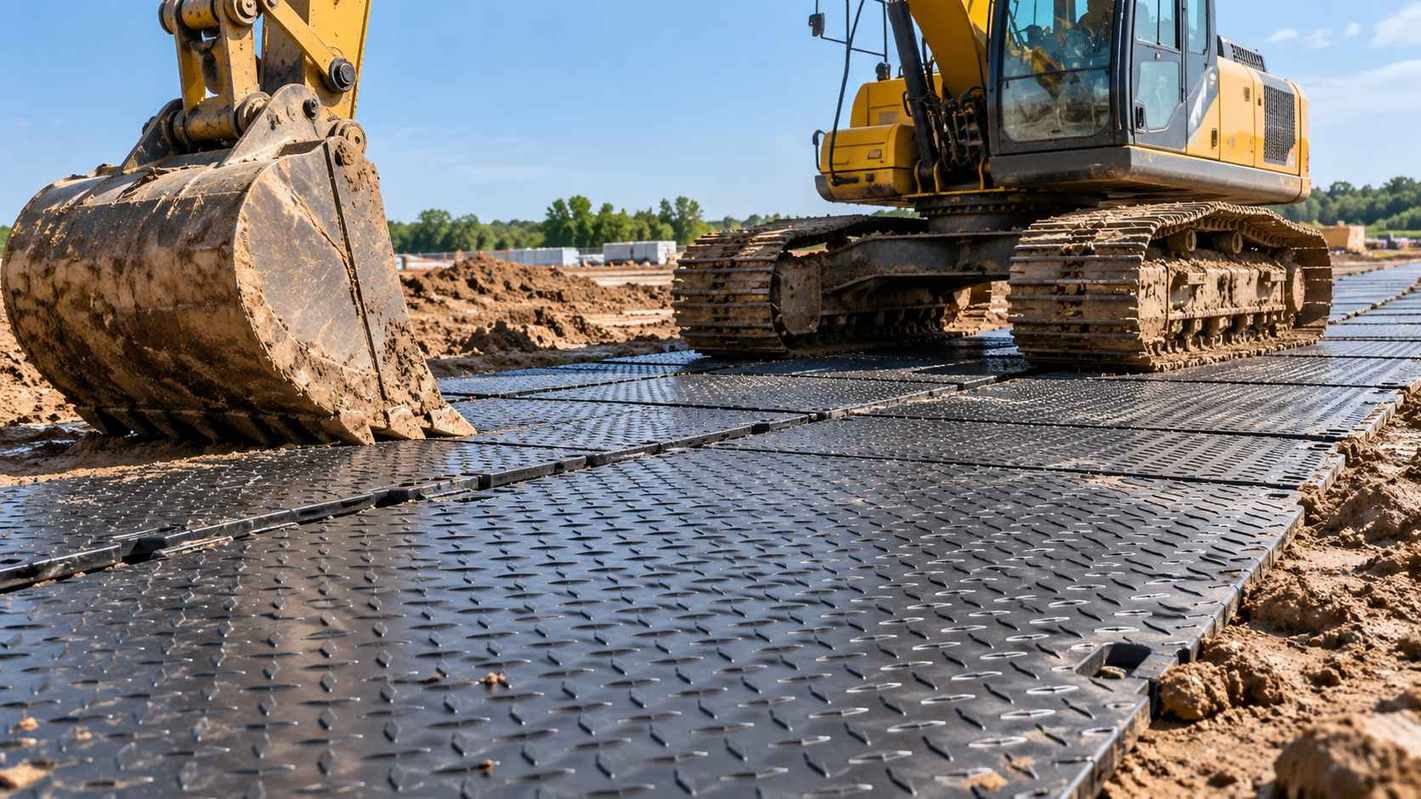
Ground protection mats are designed for repeated use, but damage does not always happen while vehicles are moving across them. A panel may be dragged over gravel during unloading, forced into position with a steel tool, or lifted while its connectors remain attached. These handling mistakes can leave damaged edges, enlarged connection holes, deep scratches, or permanently distorted sections. Such defects are particularly frustrating for contractors and rental companies because they often appear during relatively short installation or removal operations. Preventing them requires more than careful lifting. Ground preparation, handling methods, connector removal, and cleaning procedures all influence whether a mat remains suitable for its next project.
What Causes Ground Protection Mat Damage Before ddInstallation?
Some panels are damaged before they are ever placed in their working position. The most common risks involve rough handling, unsuitable temporary storage, and contact with sharp objects.
Dragging panels across hard surfaces
Dragging one end of a mat across exposed gravel to relocate it might sound like an easy way to get a large number of mats in place when crews need to move multiple panels.
But stones lodged under the mat can scratch quite deeply. Sharp metal edges or broken concrete can gouge into the drive surface locally.
The problem is even more disappointing if the dragging force is centered on a hand hole. All hand holes are there for handling, but never assume they’re suitable for all kinds of pulling.
The safer method is to lift or mechanically move the panel by its designed handling locations and/or with the correct gear. When dragging is necessary, the contact surface and method should be evaluated first.
Placing mats directly on uneven debris
Temporary storage habitats can slip your mind.
A panel spanning sections of broken concrete may have only a handful of spots of contact. Workers stacking a second panel can inadvertently trap debris between the two surfaces.
Prior to installation, a member of the handling team needs to take a look at the staging area and eliminate sharp things. Support panels in accordance with the requirements for the particular style and keep panels where edges and connection features will not be exposed to impact that is unnecessary.
This becomes particularly important when temporary surface protection is being installed around active construction work, where loose materials may accumulate throughout the day.
How Can Installation Methods Damage Mat Edges and Connections?
Focus on edges and connection points since these are likely to bear significant force while positioning.
Even if the panel base remains in good condition, damage may happen.
Forcing panels into position
In the installation process, a minimal space often shows between two adjoining mats. Applying more force might close the gap but still does not determine what caused the gap.
Perhaps a stone under one corner is preventing the panel from sitting in the right place. Or, the connector could be misaligned.
Applying a hammer or steel bar to ram the joint out can crush the edge but will not knock out the obstacle.
The best sequence would be to just stop, determine what the interference was, lift or move the panel safely back into position, and then check the fit again.
Incorrect connector installation
Connections systems differ. Some use pins; others have interlocking elements; and yet others have separate fastening elements.
The accurate actions rely on the supplied structure.
A pin entering a misaligned hole may gouge the hole edge or distort the connector. The same damage may occur to a mating part if an interlocking joint is assembled with grit in the groove.
Prior to establishing a connection, workers should verify:
Whether the holes or interlocking features are aligned.
Whether soil, stones, or other debris obstruct the connection.
Whether the correct connector and approved installation tool are being used.
Whether the joint can be secured without visible distortion.
If excessive force is required, the connection should be checked rather than forced.
Damage to a connection on a reusable system can cause issues on subsequent installations even when the remainder of the panel may be serviceable.
Why Does Ground Preparation Matter for Preventing Mat Damage?
The ground preparation is generally regarded in the context of surface protection. But it also impacts the condition of the panels during the installation.
A mat placed on a sharp obstruction can be damaged when installers step onto it to position, adjust, or align it with another section.
Remove sharp objects before positioning
Local damage can be caused by broken masonry, offcuts of metal, protruding reinforcement or pointed stones.
Things may not be fully visible on a quick glance due to loose soil or coverings such as vegetation.
The crew responsible for installation needs to examine the contact surface and eliminate any items which may poke or cut through a mat.
This does not imply that every installation needs excessive amounts of earthworks, the nature of the existing surface should determine the amount of preparation needed and what the installation instructions prescribe.
For contractors working in construction applications, a short inspection before placement may avoid more difficult repairs later.
Avoid trapping debris beneath adjoining panels
Debris may be introduced during installation itself.
For example, gravel can fall onto the edge of an installed panel while another panel is being moved into position. If the second panel is lowered without checking the joint, the stone may become trapped.
The resulting gap can tempt workers to force the connection.
Instead, the joint area should be cleared before the panels are brought together.
| Installation finding | Possible damage | Corrective action |
|---|---|---|
| Sharp debris beneath a mat | Gouging or localized indentation | Remove obstruction and inspect contact area |
| Stone trapped at joint | Edge damage or poor connection fit | Clear joint before connecting |
| Misaligned connector | Hole deformation | Reposition and check alignment |
| Panel dragged over gravel | Surface scratching | Use suitable lifting or handling method |
The table is intended for installation troubleshooting, not as a substitute for a product-specific procedure.
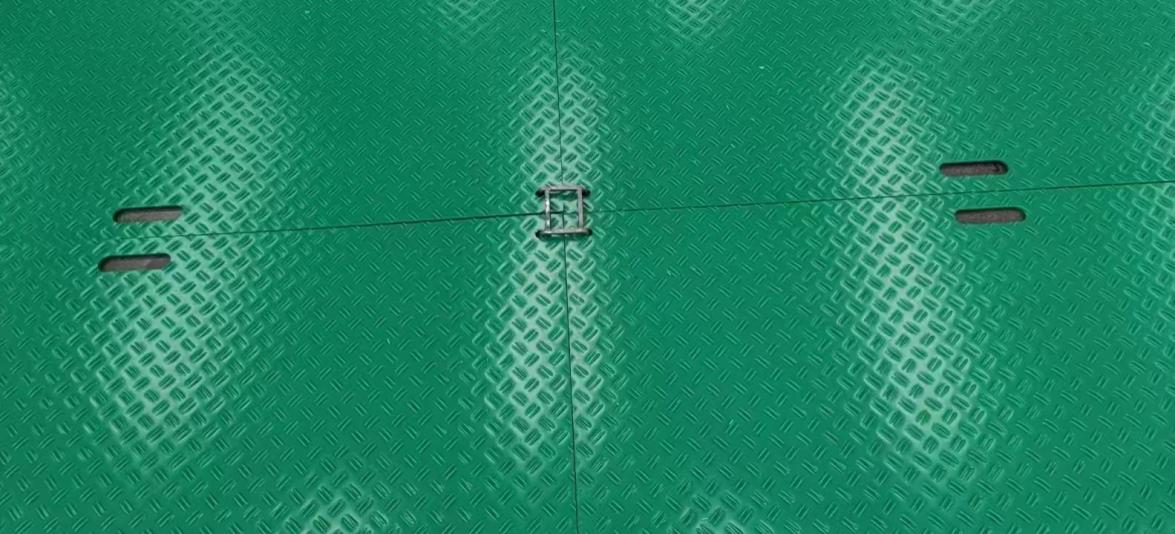
How Should Ground Protection Mats Be Removed Without Causing Damage?
Getting out may be tougher than getting in particularly after mud, sediment, or construction debris has been trampled into a mess around the panels.
It is hard to resist yanking the panels out or lifting them up before the connection has been broken.
This method can turn a reusable mat into a damaged part.
Release connections before lifting
A connected panel isn’t a standalone panel.
Lifting one side if a pin or interlock is still engaged produces a moment of load to the connection.
Prior to lift it is recommended to disconnect and disarm the identified connectors in the approved manner.
If a connector is hard to pull, ensure dirt isn‘t packed in, or the connector isn‘t crooked or bent. Don‘t use excessive force without diagnosing the problem, as this can damage the connector and panel.
Disconnects should be stored apart from where they can be snagged under the next panel.
Free the panel before pulling
After removing the connectors, the addition of a dry mud skin to the mat may make it difficult to lift.
Aggressive pull through a hand hole can stress that area unnecessarily.
Firstly, workmen should clear away the accumulated stuff in the edges, and see if the panel is still held by something.
Depending on panel dimensions, site conditions and the manufacturer‘s handling instructions, the appropriate lifting equipment may be required.
The key difference is whether you’ve lifted a free panel or used the panel to get over the obstacle.
Avoid stacking dirty panels carelessly
The exposed panel might have stones, metal bits, or hardened earth adhered to its surface.
A panel can scratch or gouge the surface next to it if it is stacked directly onto the debris.
Insofar as practical, free abrasive should be removed before stacking. Support panels safely and handle them carefully to avoid damaging corners and connection features.
What Should Be Checked Before Mats Are Cleaned and Reused?
Don’t expect a reusable mat to go right back into use just because it was taken out.
Inspection is especially critical at edges, hand holes, and connectors, where handling damage might not be as apparent as marks on the primary face.
Distinguish ordinary wear from functional damage
Surface scuffs may occur during normal use. They are not equivalent to cracks, broken edges, or damaged connection holes.
A practical inspection should look for:
| Component | What to inspect |
|---|---|
| Main panel | Cracks, punctures, deep gouges, lasting deformation |
| Edges and corners | Chips, fractures, distortion |
| Hand holes | Cracking, tearing, abnormal enlargement |
| Connection points | Damaged holes, distorted interlocks |
| Surface texture | Embedded debris or severe damage |
Any observation that might impact safe handling, connection, or intended use must be checked with the supplier‘s acceptance criteria.
Never assume a component will be OK to use if it can still be fitted.
Clean without creating further damage
Water and appropriate cleaning equipment is usually sufficient to remove mud and loose soil.
Use of abrasive metal objects for scraping may cause further scratching, especially in textured areas and connector recesses.
Choose cleaning method which is suitable for the panels and the manufacturer’s directions.
Finished panels should be drained accordingly and then stored away from sharp debris and unnecessary mishandling.
For example, a simple condition record will allow you to differentiate damage after one installation from issues showing up on your next.
Need More Reliable Ground Protection Mats for Repeated Projects?
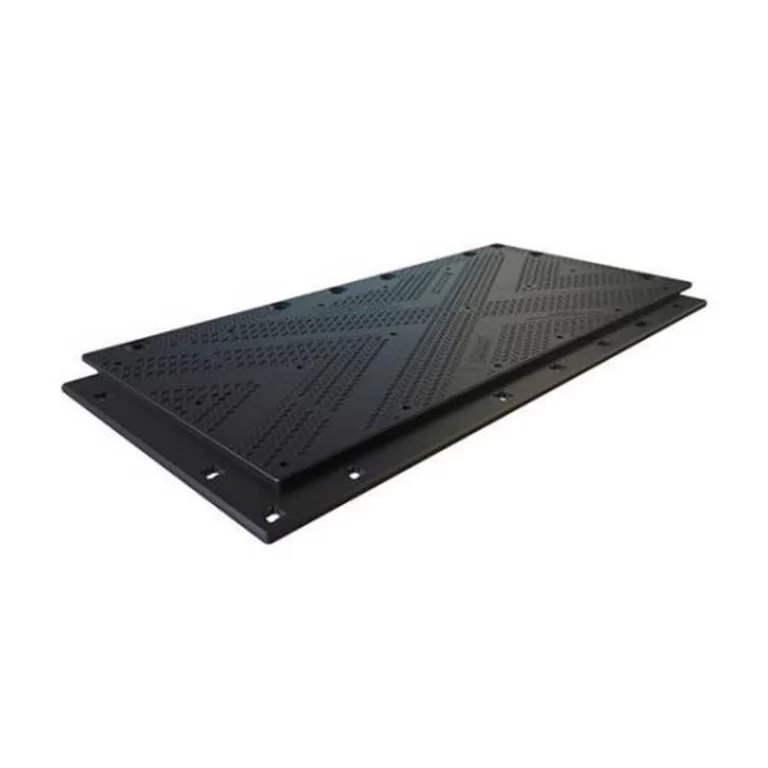
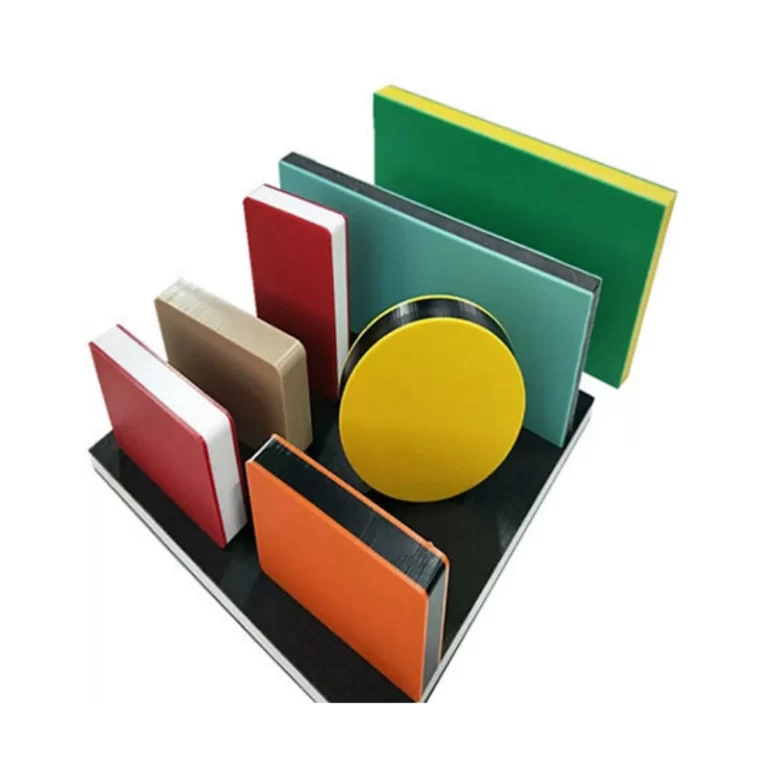
Contractors and equipment rental businesses often need temporary protection panels that can be handled, cleaned, and reused across multiple jobs. Shandong Ruinato Environmental Protection Technology Co., Ltd. supplies engineering plastic products, including Heavy Duty Ground Protection Mats. The product information states those are HDPE boards with textured surfaces, optional handholes, and standard sizes, which are 1220 × 2440mm, 915 × 2440mm and 915 × 1830mm. The information displays various surface textures and customization services. Buyers expecting to do more repeated installation rounds should watch the useful discussion over panel size: Handling installations, compatible connectors, cleaning needs and replacement steps should be checked before ordering.
Conclusion
Each time they are unloaded, installed, removed, washed, and stored, ground protection mat damage can occur. Damaged panels can result from dragging them across abrasive surfaces, pushing and pulling panels together, pulling them up before releasing the pins, and stacking dirty mats for storage. These problems can easily be avoided through the proper sequence of handling, not by the great strength of the material. If installation instructions, tools, joint areas free of mud, and a visual inspection procedure after removal are available, early problem identification is much easier. For contractors and rental companies, saving reusable panels can save costly replacements between projects.
FAQs
1. Can ground protection mats be dragged during installation?
Dragging can cause scratches, gouges or other damage particularly over gravel, broken concrete, etc. Panels should be handled in accordance with manufacturer’s recommendations and with suitable lifting facilities or pick-up points where appropriate.
2. Why do connection holes become damaged?
Holes can be damaged by misaligned connectors, incorrect tools, excessive force, and lifting before connections are released. The installation team should ensure connectors are properly aligned and obstructions are cleared before securing or removing connectors.
3. Should mats be cleaned before stacking after removal?
Loose stones, metal fragments, and other abrasive debris should be removed where practical. Trapped material can scratch adjacent panels during stacking, handling, or transport.
4. Does a scratched ground protection mat need replacement?
Not necessarily. Small surface scratches are different from cracks and gouges into the material or damage to the connection point features. You should decide, based on the manufacturer‘s acceptance limit and condition of the area.
5. What should rental companies inspect before sending mats to another project?
Review the main panel, edges, hand holes, and connection features. Examine for cracks, large deformation, damaged holes and embedded debris. Any panel found questionable should be evaluated prior to re-use.