
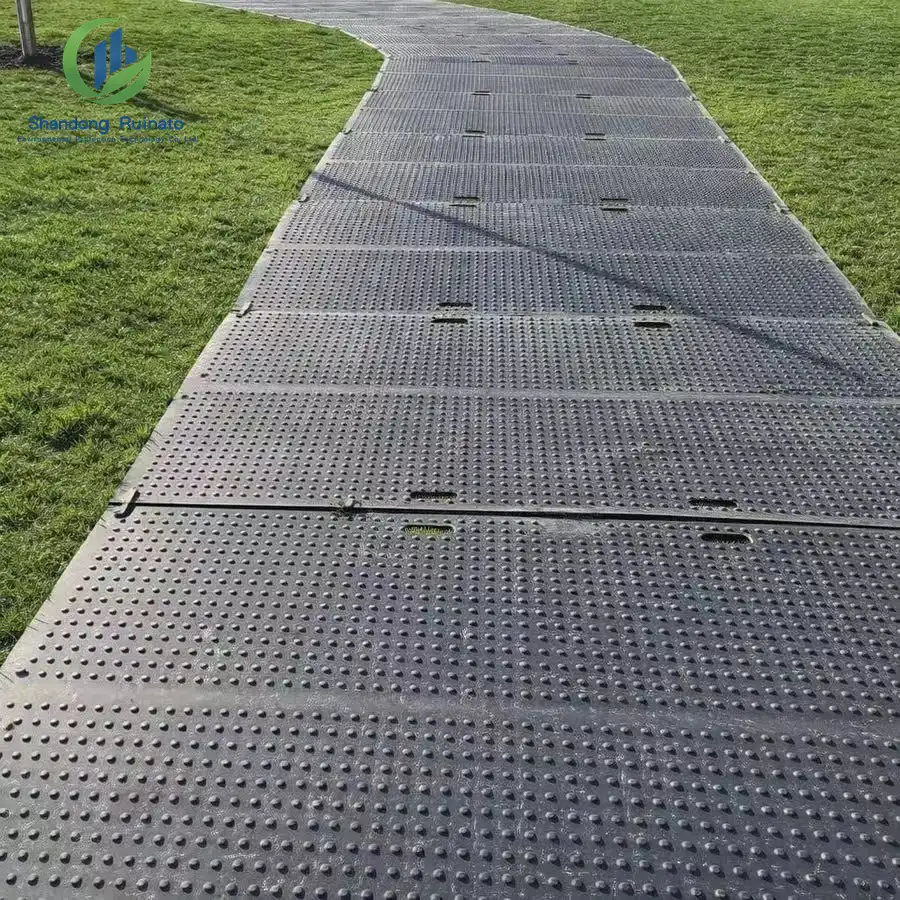
After precipitation, any ground protection mat route should not be reopened until the accountable site team has inspected both the surface and subsoil support base along with all connectors for capacity of concentration. Just because yesterday I delivered successfully, does not mean that the conditions are right for today. Rain will change the surface and approaches even once any visible rolls remain intact. Even if the visible mats remain in place, rain can alter ground and approach.
For site managers and equipment contractors, the reopening decision should be tied to specific observations and operating limits. A reopening record should summarize the route inspection, identify what changed, list corrective work and name who released the route. A product load figure alone cannot authorize travel across unknown or washed-out ground.
What Could Have Changed Beneath an Intact Mat Route?
Begin with the ground and drainage around the route. Standing water can conceal erosion, soft patches and changes at trench crossings or route edges.
Inspect the approaches and adjacent ground
Compare the route with the approved layout and earlier condition records. Look for washouts, exposed voids, displaced soil and water flowing across or along the access. Pay particular attention to the transition from firm ground onto the first mat and from the last mat back onto the work area.
If support cannot be established safely, keep the affected area closed and seek the appropriate site assessment. Do not drive a heavy machine across uncertain ground as a way to find out whether it will carry the load.
Separate surface protection from ground capacity
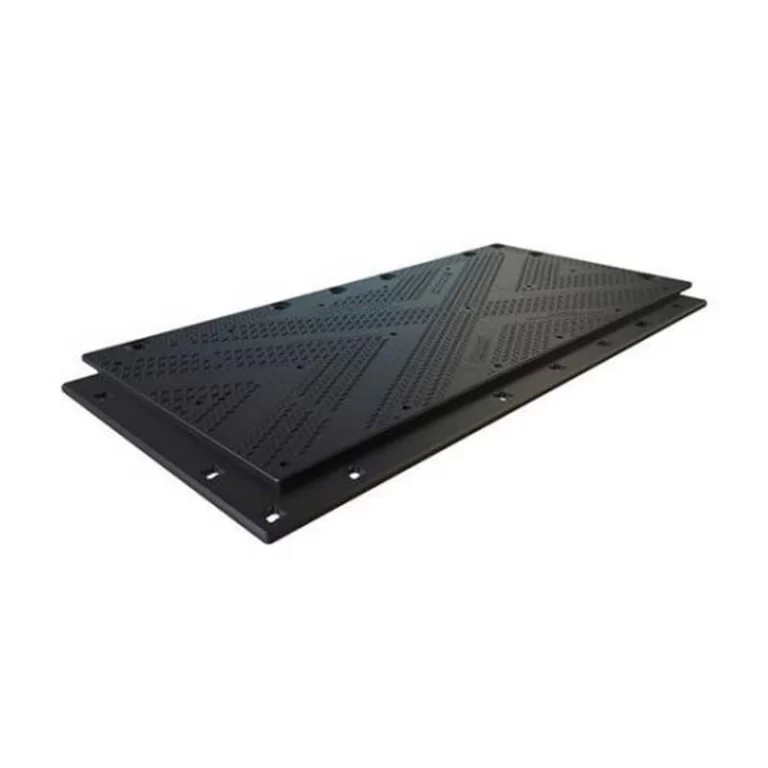
Ruinato’s interlocking ground protection mats use engineering plastics such as HDPE or UHMWPE. Their interlocking and overlapping arrangements are intended to form connected temporary access surfaces and working areas. The connected layout is a product feature; the supporting ground, equipment configuration and site conditions still need to be assessed for the actual route.
The Ruinato range distinguishes interlocking, heavy-duty and medium-duty ground protection mat products. These are different product options within the range, rather than a single interchangeable panel. Identify the installed model and its approved application before discussing replacement pieces or a change in traffic, and keep the product specification separate from the site’s reopening authorization.
Review Ruinato ground protection mat options against the installed configuration. Avoid transferring a claim from another mat model to the route simply because both products are plastic.
Which Surface and Connection Defects Need Attention?
Inspect the panels and connections after confirming that the inspection can be performed safely. Use a marked route plan so findings can be located and corrected.
Check traction and changes in level
Look for mud, debris or other contamination that can obstruct the intended surface texture. Check lifted edges, displaced panels and transitions that could affect wheels, tracks or pedestrians. Cleaning a surface may improve the condition of the tread, but it does not correct lost support beneath the panel.

Record cracking, damaged connection areas and other visible deterioration. Follow the supplier’s inspection and replacement guidance for the exact product. Do not heat, drill or otherwise modify a damaged panel on site without an approved method.
Verify the actual connector system
Ruinato’s interlocking range describes a cam-lock connection system and connection points around the panel edges. The cam connector incorporates a stainless-steel core and a molded polymer body. These details identify a particular connection approach; inspection should check the specified connector and engagement arrangement rather than assume any available bolt or link is an equivalent substitute.
Confirm that the installed connectors are present, seated and undamaged under the applicable instructions. Where the route has moved, investigate the reason before reconnecting it. Replacing a missing connector does not resolve erosion or an unsuitable turning arrangement.
Has the Intended Traffic Changed Since Installation?
The route inspection should include the equipment that will actually use the route. A different machine or manoeuvre can change the demand even if the weather has improved.
Review more than total machine mass
Record the equipment configuration, payload, wheel or track arrangement and travel path. Include turning, braking, gradients and repeated passes where relevant. Keep crane outrigger support and other concentrated operating loads within their separately assessed arrangements; a travel route does not automatically serve as an outrigger platform.
Check that the full travel width and turning space remain within the approved mat layout. If traffic has cut across an edge or created a new approach, treat that change as part of the route review rather than an informal driver preference.
Define who can release the route
The release should identify the equipment and conditions it covers. A useful record includes:
- Inspection date, weather and marked route limits.
- Ground, approach, panel and connector observations.
- Corrective work and unresolved restrictions.
- Authorized traffic, operating conditions and responsible release.
Make the restriction as specific as the release. In a hypothetical record, one approach may remain closed while a separate inspected section is available to the equipment listed in the approved plan. Mark both limits on the same drawing and communicate them to the people directing vehicles. Avoid a general “route checked” message that could be read as approval for every machine and every branch. If the responsible assessment cannot establish the permitted use, the record should show the open question and the action needed before release.
Discuss the exact mat configuration through Ruinato technical enquiries. Provide site photographs and the installed product identification; a supplier can review product details without replacing the site’s responsibility for ground assessment and traffic control.
How Can You Make Future Rain Checks Easier?
Keep the reopening record with the baseline so the next inspection can focus on changes. Start the record when the route is installed, before the first period of bad weather.
Retain the approved layout and component identification
Keep the mat model, connector type, route drawing and photographs of approaches and crossings. Mark areas that need closer observation after rain or repeated traffic. Establish the events that require another check, such as further rainfall, visible movement or a change in equipment.
Ruinato offers reusable HDPE ground protection mats for temporary surface protection, alongside interlocking access options. Its product range also includes different surface and size configurations. When ordering additional panels, identify the existing system and the required geometry so a new batch can be reviewed for compatibility instead of being selected only by a similar appearance or colour.
Turn repeated defects into a layout review
If the same edge lifts or the same approach erodes after each rain, repeated cleaning and connector replacement may be addressing symptoms. Review drainage, route location, ground preparation and operating practices with the responsible team. A different mat choice may be part of the discussion, but it should follow the identified cause.
Compare Ruinato heavy-duty mats and medium-duty mat options only within their verified application requirements. Request the relevant product information for the site rather than treating the category name as a capacity certificate.
Conclusion
Check underlying support, approaches, surfaces, connections and the intended traffic together. Close unresolved areas and correct the cause of movement before treating an intact-looking mat as proof that the route is ready.
For a product review or an extension to an existing route, send Ruinato your mat identification, equipment details and route photographs. Include the rainfall-related changes and proposed layout so the discussion addresses compatibility and use conditions before more panels are ordered.
FAQs
Q1: Can an undamaged mat confirm that wet ground is safe?
A1: No. The visible panel can remain intact while support beneath it changes. Ground condition, approaches and the intended equipment need a separate ground assessment.
Q2: Can we replace missing connectors with spare hardware?
A2: Use the specified components and installation method for the actual system. A substitute should be reviewed and approved rather than chosen because it fits through the connection point.
Q3: When should the route be inspected again after reopening?
A3: Checks for pertinent events and areas of interest, such as additional rainfall or visible activity or altered traffic movement. Establish the actual route that represents what continues through site and define stop-use criteria, how often will it be inspected. The actual route should then be inspected by the site team, who must define inspection frequency and stop-use criteria.