
With the machine removed, the parking area may still have a low spot. A replacement enquiry starts with finding out whether that spot belongs to the panel or to the ground under it. Is the panel resting in a depression, or does it keep the bend when lifted away? There can be some of each. A photograph taken with the panel still on the ground cannot show the difference, however clearly it shows the hollow.
Ground protection mat deformation is easier to investigate while the original condition is still available. Once someone has weighted a panel flat, a supplier trying to explain the bend has lost a useful observation. The inspection therefore starts at the parking position and continues with the safely unloaded panel, including any recovery that occurs afterwards.
What does the deformation follow after unloading?
The machine position is worth capturing before unloading. Lifting the mat removes the link between its surface and the wheel position; a mark on the plan or a photograph can preserve that link.
Preserve the footprint and orientation
A marked site plan can connect the panel orientation to the machine position. The depth at the center says little about how far the low area extends across the route. Showing its edges against a fixed site reference makes it possible to locate the affected ground after removal. Close inspection must wait while the responsible site team controls access to any unstable section and arranges unloading safely.
Check the panel on a defined inspection support
When the panel can be moved safely, its shape can be compared on a verified level inspection surface, using the support arrangement specified by the supplier. A mat that looks much flatter there gives more reason to investigate the ground. Curvature that remains away from the site is evidence that the panel also needs assessment.
A rut can develop under a panel while the panel is bending over it. After removal, some of that bend may remain. That leaves a bend to measure away from the rut as well as the rut itself. Pressing the panel flat before taking the reading would erase that part of the comparison. Heat could alter it too, so the panel should be left in its unloaded condition for the initial inspection.
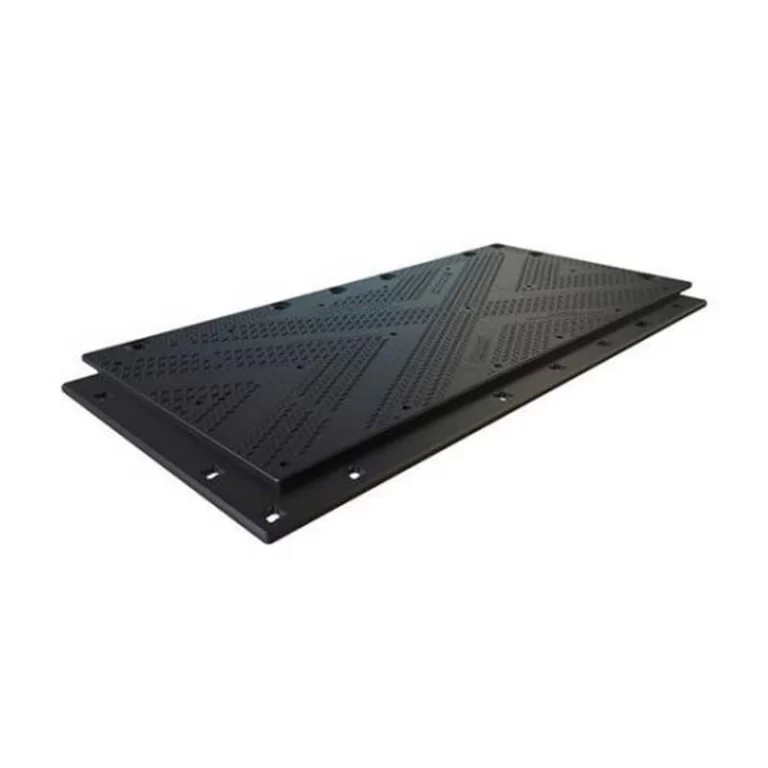
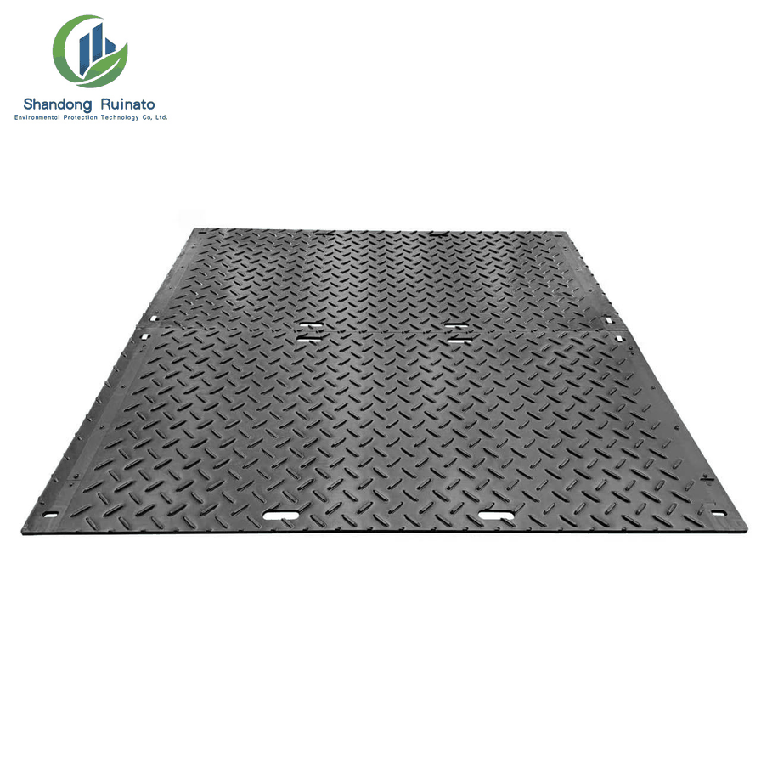
The delivery specification deserves a look here. The temporary access mat category can help identify the supplied configuration, but two black panels that look alike may have different thicknesses or different connections. A comparison of their behavior needs more than a similar appearance.
How can creep differ from settlement?
Time provides one part of the distinction; the exposed ground provides another. Neither is available from a photograph of a mat still lying under the machine.
Distinguish material strain from movement of the ground
Under a sustained stress, a material can continue to deform; this is creep. Polymer formulation and temperature influence how it responds during the hold. Stress level matters too. Passing traffic removes the stress as the wheel moves on, whereas parking keeps it at the contact area for much longer. This is why a short-term strength result cannot, on its own, explain what a mat will do over a long parking period.
Settlement concerns the supporting ground. A new low area, displaced soil beside the wheel path, or water gathering where the route was level may point towards movement there. The qualification is “new”: without earlier site records, uneven ground discovered after removal might already have been present when the mats were laid.
Compare the panel and the ground separately
For the unloaded panel, repeat readings at the same locations allow recovery to be observed. Each reading needs an elapsed time and panel temperature, with the orientation and measurement support held consistent. Otherwise, resting the panel differently can create the appearance of a change in shape.
The ground measurements need their own stable reference outside the disturbed area. An adjacent mat is a poor datum if it too has moved. A bend that reduces after unloading gives a reason to examine the time-dependent response. It does not explain everything that happened beneath the load. If curvature remains, the assessment still has to consider the loading and temperature history and possible damage. In either case, reuse depends on the agreed acceptance requirements.
Which operating records make the diagnosis useful?
“The machine was below the advertised capacity” sounds reassuring until someone asks where that weight acted. Total mass gives little information about a particular wheel path or a panel resting over a void.
Reconstruct the contact load and support condition
The supplier needs the machine configuration and actual operating mass where available, together with tire or track contact geometry. Parking duration and weather help explain the exposure; records of ground condition help explain the support. It is especially useful to know whether a wheel path crossed an unsupported area. Where contact loads are unknown, that uncertainty needs to remain visible. Assuming that each tire carried an equal fraction of the machine weight does not resolve it.
Keep the evidence comparable
A nearby panel may appear to offer an obvious comparison. Was it under the same wheel load, though, and was the ground beneath it equally firm? Shade can also give it a different temperature history. Its identification and exposure need to be known before its flatness can say much about the affected unit.
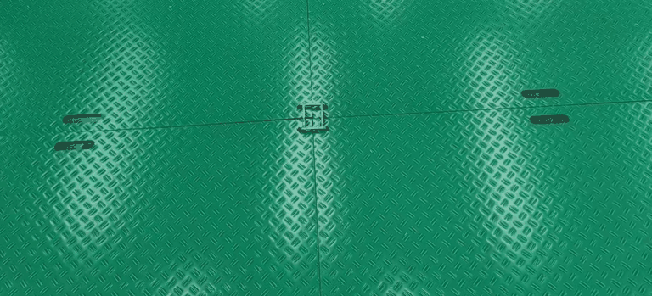
The panel connection configuration shows how the mats were assembled. It may explain a difference in alignment along the route, without explaining whether the soil carried the load. Connections do not give permission to bridge a void. An outrigger load belongs on an engineered crane support system. A ground protection panel must not be used in its place.
What should buyers request in a static-load assessment?
A load figure without a duration could describe a brief application or a long hold. Duration changes the relevance of the result to parking. Without the contact area, the stress applied to the sample is uncertain. Without a description of the support, the buyer cannot establish whether the test represents the proposed route.
Match the loading duration and support arrangement
For a useful comparison, the sample has to represent the supplied material and thickness. A report should explain its temperature and how the load reached the panel, then describe the support and duration. Measurement locations matter too. A loaded panel and an unloaded one may give quite different readings at the same point. Keeping both in the report, tied to identifiable measurement locations, shows how much movement occurred during loading and what was left afterwards.
Recovery measurements require an agreed observation period and support arrangement of their own. Without them, two reports can describe the same panel differently simply because one was measured sooner or supported elsewhere.
Specify recovery measurements and reuse criteria
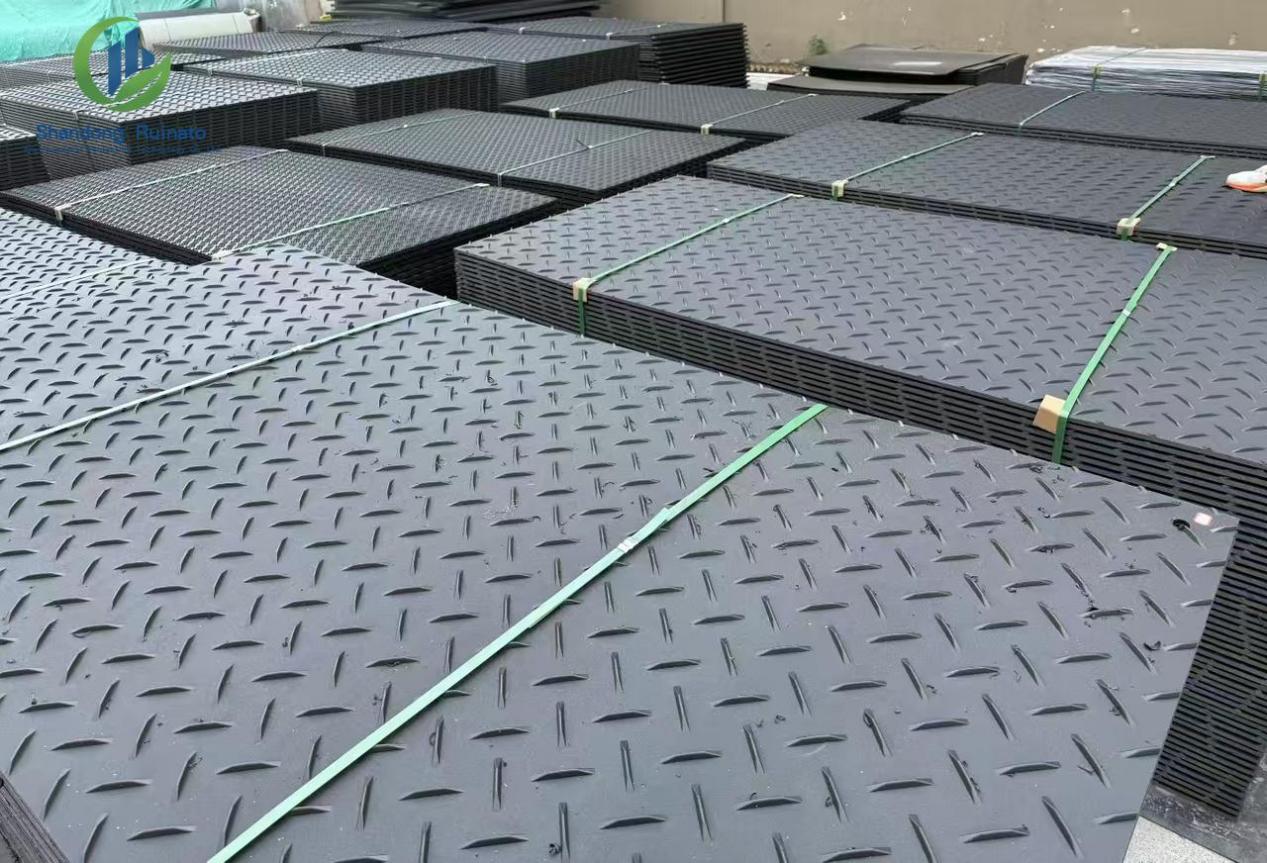
A practical measurement detail is easy to overlook: raised tread is not the structural face of the panel. A straightedge touching different tread peaks can show a different gap even when the panel shape has not changed. The measurement face and datum points need agreement before the results are compared.
Acceptance should also describe what the panel must do on return to service. Flatness may matter, as may alignment with neighboring panels and the condition of connection features. Limits belong with the supplier and responsible project engineer for the intended use. One millimeter allowance applied to every design would have little meaning.
Sample and batch identification keeps the report connected to the goods. When a report is offered for an entire range, its scope needs a closer look. Which supplied sizes and materials does the tested sample represent? The loading arrangement matters just as much; a result under one arrangement cannot establish suitability for all stationary equipment.
How should the findings change the next deployment?
The investigation has value when it changes the next decision. A new panel alone cannot correct a problem that arose primarily beneath it.
Correct the ground condition or quarantine the panel
If the ground has moved, laying another mat over the same depression would leave the support problem in place. The site team needs to investigate its drainage and preparation and restore appropriate support before reopening the arrangement. Residual distortion gives a separate reason to withhold the affected unit from service pending its assessment against the agreed criteria.
Where sustained loading contributed to the distortion, the next parking proposal belongs with the supplier and responsible engineer for evaluation before use. An extra layer changes the load path. So does a different thickness, and a span over unsupported ground raises another support question. None can be selected on site as an assumed remedy.
Make the repeat quotation answer the observed problem
A repeat quotation can address the actual problem when buyers submit the loading and recovery records. Dimensions and material identification let the supplier determine which panel the readings describe. A photograph of the exposed support then helps explain where its replacement would sit. The quotation should address suitability for those conditions, with any outstanding assumptions stated, so the buyer can resolve them before ordering.
Need help reviewing a mat configuration for sustained loading?
Shandong Ruinato Environmental Protection Technology Co., Ltd. includes Heavy Duty Ground Protection Mats in its engineering plastic product range. Its published range includes HDPE panels intended for temporary access and surface protection in different sizes and surface configurations. For prolonged parking, the enquiry must describe the contact between equipment and panel. How long the load stays there and the temperature during use help the supplier interpret that contact. The ground support also needs explaining, since it forms part of the proposed arrangement. If panels have already bent, the recovery observations belong in the enquiry. Suitability for that arrangement needs its own supporting explanation.
Conclusion
Before choosing a replacement, find out where the depression remains after safe unloading. The mat on its inspection support and the ground without its covering give different parts of the answer. A second reading made later can show whether the unloaded panel is changing. The load history helps interpret that change. The response can then concern the cause found at this site, rather than a replacement chosen simply because the route looked low.
FAQs
1. Does a curved mat prove that the polymer has failed?
No. A mat can follow uneven ground and can also retain deformation after removal. Comparing it safely on a defined inspection support with the exposed ground helps distinguish those possibilities.
2. How long should recovery be observed?
The observation period depends on the material and its service, so it needs agreement with the supplier and project engineer. Note when each reading was taken and at what temperature. The same interval cannot be assumed to mark the end of recovery for every mat.
3. Can a recovered panel automatically return to service?
It still needs to meet the agreed requirements for flatness, physical condition, connections, and intended loading. Looking flatter is only one observation in that decision.
4. What should accompany a deformation complaint?
Panel and batch identification, machine contact details, duration, temperature, ground observations, photographs, and repeated profile readings make the complaint assessable. They should describe the original condition before any attempted correction.