
Plan ground protection mats as a system that will be lifted, checked, transported and installed again. The first access route is only one stage of the job. Missing connectors, mixed components and unrecorded damage can leave a reusable mat stock difficult to deploy at the next location.
For contractors moving between work zones, Ruinato ground protection options can be reviewed against the intended traffic and handling arrangements. A sensible purchase needs to account for the return journey as well as the opening day.
Which parts of the access system must move together?
At dispatch, write down which system is leaving the yard. The list needs the mat model and its connection parts, plus any specified transitions, accessories and handling equipment. A stack of panels is not a ready-to-install route if the compatible connection parts are at another site.
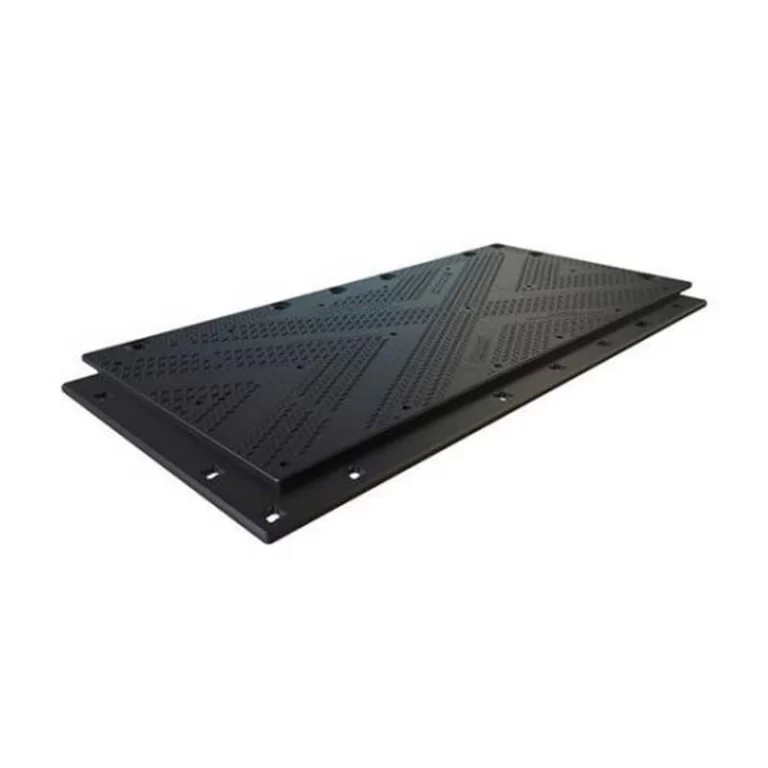
Ruinato supplies temporary access mats in several categories, including interlocking, heavy-duty and medium-duty products. The interlocking offering includes HDPE or UHMWPE material routes and overlapping connections. These are product choices to confirm, rather than evidence that every mat in a mixed stock can connect to every other one.
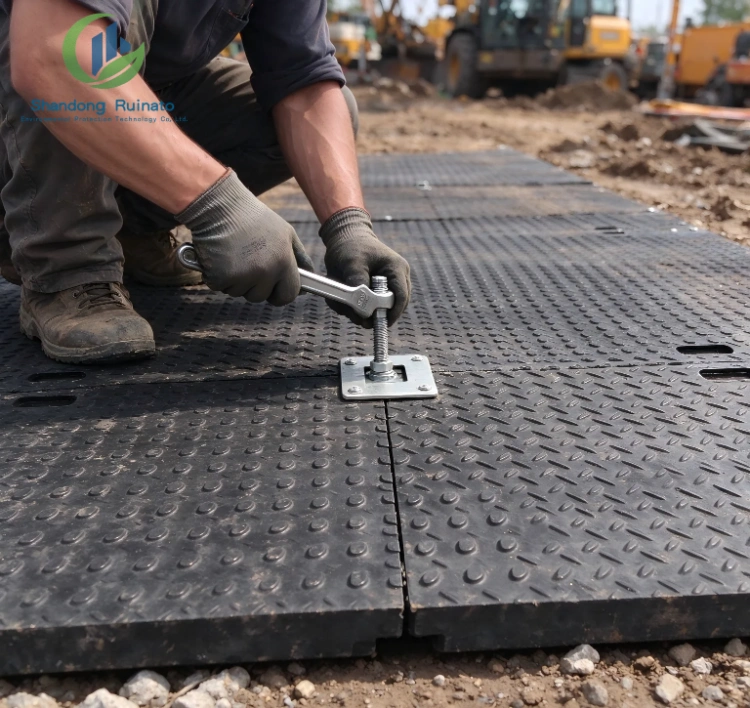
Ruinato’s interlocking series includes a cam-lock connector built around a stainless-steel core with a moulded polymer body. Identify the mat connectors by system on the dispatch sheet. A crew sorting returned parts by appearance alone could put a similar-looking but incompatible connection into the next shipment.
Build the return list before the route opens
Give each deployment a stock record showing what left the yard and what should return. Count accessories by type. If another crew borrows accessories, record the transfer against the dispatch list. Without that entry, the yard may count those parts as available long after they have left with another job.
For a reusable access route, keep the approved layout and traffic assumptions with that stock record. They explain what the previous deployment was designed to do. They do not authorize the same arrangement on different ground or under different traffic.
What needs checking when mats are recovered?
Before recovery starts, give the crew the supplier’s inspection and cleaning requirements and identify the receiving areas. Leave room for held components as well as accepted stock. Putting a suspect panel in the middle of a ready-to-dispatch stack simply passes an unresolved question to the next crew.
Look at the features needed for the next installation: the mat body, contact surface, connection points and relevant handling features. Record the location and nature of damage rather than using an unexplained “worn” label. Replacement or reuse decisions need the supplier’s criteria for the actual product.
Ruinato’s HDPE ground mats are intended as reusable temporary surface-protection products. That reuse depends on condition. If recovery has left a cracked connection area or an altered component, the fact that the route worked yesterday does not settle whether the part can go out again.
Keep cleaning separate from acceptance
A clean panel is easier to inspect, but washing cannot repair a damaged feature. Check which cleaning method suits the selected product. If the returned mat carries oil or process residue, first establish how it must be handled and how that residue will be disposed of; keep it out of clean stock until that question is resolved.
For mat connectors, keep removed, accepted and suspect parts in clearly separate containers. Inspect the mating feature on the panel when a damaged connector is found. A new connector cannot correct damage in the place where it engages.
How do transport and storage affect the next deployment?
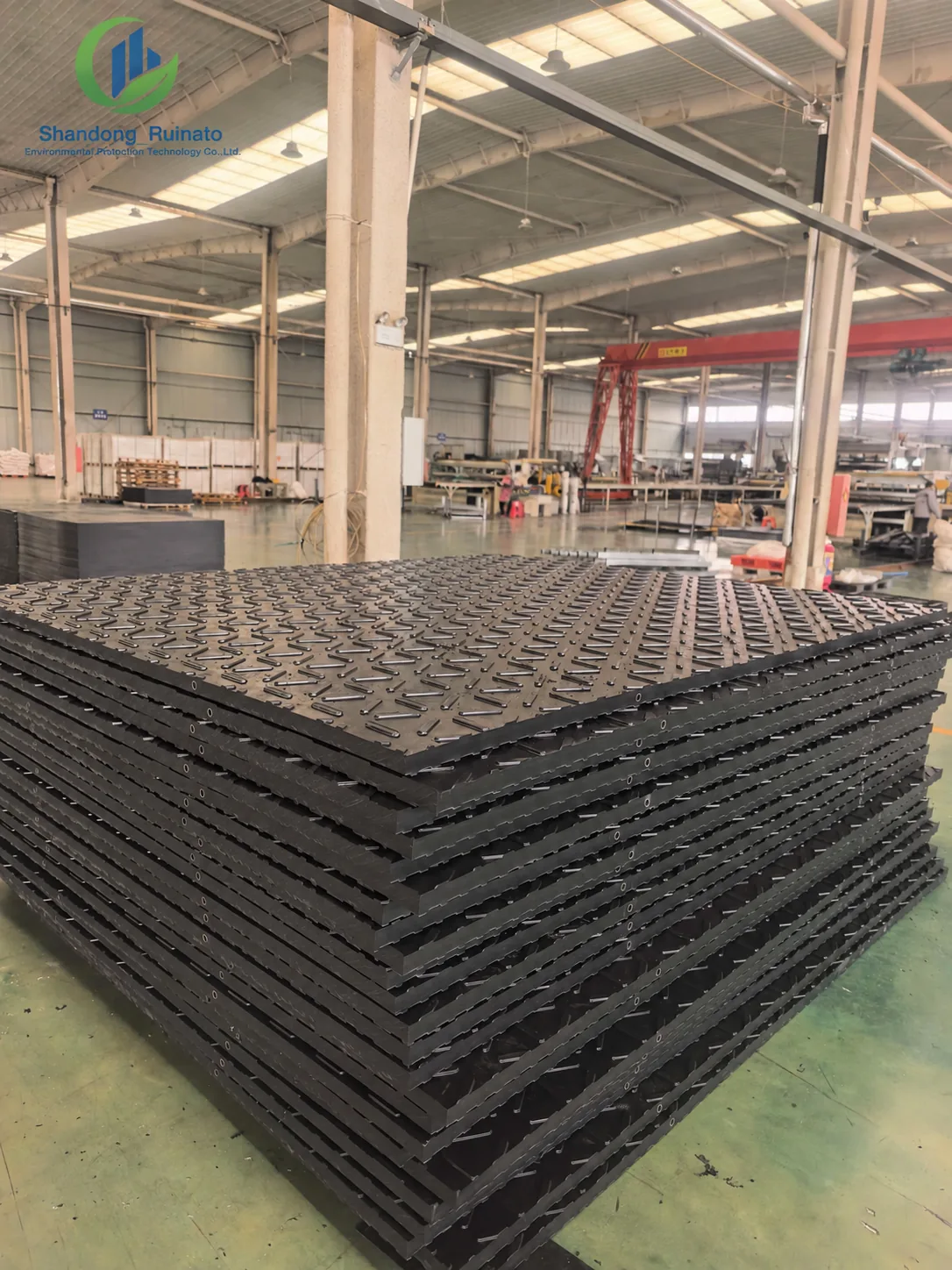
A repeated-move project needs a handling plan that matches the actual mat dimensions, mass and permitted lifting method. Confirm those details for the selected model. Do not assume that a photograph of manual handling applies to a larger or differently configured mat.
For its listed interlocking design, Ruinato gives overall dimensions of 13 ft 5 in by 6 ft 8 in by 3.54 in thick, with approximately 70 square feet of usable surface. The outer dimensions and usable coverage answer different planning questions. Transport needs the former; a route take-off needs the latter, together with the connection layout. Confirm the selected model before applying those figures to a shipment.
Ruinato offers size options and can discuss custom dimensions for ground protection products. That flexibility matters to transport and layout as well as coverage. Work through the selected size on the transport plan: how large is the stack, where can it be unloaded, and can the available equipment handle it at the destination?
Use the product supplier’s handling information to agree the stack, securing and unloading arrangement with the carrier. Pack the connection parts in identified containers rather than leaving loose accessories among panels. The receiving crew needs to know which stack and accessory container belong to the same system without unpacking the entire load.
HDPE ground mats also come with different surface forms. Ruinato’s products include raised anti-slip textures, but texture choice does not remove the need to inspect the surface condition. Look at what remains on that texture and whether the surface is damaged. A recognizable tread pattern does not establish how the route will perform in the actual conditions or justify releasing it without the project checks.
For temporary access mats returning to storage, preserve the inspection status. A simple accepted, held-for-review or rejected designation is more useful than a stack labelled only with its last site. Keep any supplier decision or repair record with the held stock.
Can the same mat layout be reused at the next site?
The components may be reusable; the previous site assessment is not. Review the ground, route geometry, approach transitions and intended traffic again. For example, a machine travelling straight across prepared ground does not impose the same application questions as that machine turning in a confined area.
The ground beneath ground protection mats still has to support the work. Give the responsible site specialist the intended loads and movements, selected system and actual support conditions for assessment. The presence of panels cannot establish ground bearing capacity. A broad product load claim cannot approve an unknown site.
For a reusable access route, define who checks installation, who releases it and what changes require another review. A different vehicle, changed ground condition or relocated approach can matter more than the fact that every panel is present.
Send the traffic details, layout, ground information and move frequency through Ruinato technical enquiries. Ask about the compatible system, handling information and replacement components together. At the same time, ask how to identify and order replacement connectors. That information belongs with the stock record, where the next crew can find it.
Conclusion
The handover between sites is where a reusable stock can lose its identity. Send the next crew the accepted components, accessory count and condition record together, with the agreed handling instructions. For the next job, review the access application using that site’s ground and traffic details. Approval of the previous route cannot be carried over with the stack.
FAQs
Q1: Can different brands or models of mats be connected together?
A1: Only use a combination confirmed for the intended system and application. Matching panel dimensions do not establish that the connection geometry or installation method is compatible.
Q2: Does a reusable mat need inspection after every move?
A2: Follow the supplier’s requirements and the project’s inspection plan. At recovery, the panels and accessories are accessible for a condition check. Use that opportunity to find damage or missing parts before assigning the stock its next dispatch status.
Q3: What should be included in a repeat-deployment enquiry?
A3: Describe the traffic and ground at each intended use, then attach the route layout and available handling equipment. Include the move pattern and model identifiers for any stock you already hold. Discuss the mat system and its replacement parts as one package.