

The landed cost of a concrete protective liner is not the same as the supplier’s quoted product price. For an international B2B buyer, the amount paid before the material reaches the designated delivery point can include the liner price, export terms, packaging, international freight, insurance, customs duties, clearance charges, and inland transportation. These costs can change significantly with sheet dimensions, shipment volume, destination, and Incoterms. A useful landed-cost calculation therefore starts with the commercial terms on the quotation and follows the shipment through import clearance and final delivery. This article focuses specifically on that import-to-delivery calculation, rather than installation, welding, maintenance, repair, or lifecycle costs.
What Should Be Included in a Concrete Protective Liner Landed Cost?
A landed-cost calculation should begin with a clear boundary. For this type of purchase, the boundary is the amount required to bring the goods from the agreed shipping point to the buyer’s specified destination.
Start with the quoted commercial price
The first figure is normally the supplier’s product price under the agreed Incoterm. A quotation using EXW does not carry the same cost structure as one using FOB, because the buyer assumes different logistics responsibilities.
For procurement comparison, the commercial offer should identify:
| Cost item | What the buyer should confirm |
|---|---|
| Product price | Quantity, unit price, currency |
| Incoterm | EXW, FOB, or another agreed term |
| Packaging | Included or charged separately |
| Export handling | Seller or buyer responsibility |
| Freight | Included or quoted separately |
| Insurance | Included or arranged by buyer |
| Import charges | Buyer responsibility unless otherwise agreed |
| Inland delivery | Destination and responsible party |
The important point is consistency. Comparing one supplier’s FOB price with another supplier’s delivered price can produce a misleading result even when the two numbers appear to be for the same material.
The construction industry application provides broader context for the types of engineering projects in which material procurement and delivery planning can become part of the project specification.
Do not mix landed cost with project installation cost
For this calculation, installation labor, field welding, anchoring work, concrete repair, inspection services, and future maintenance should remain outside the landed-cost model.
Those expenses may matter to the overall project budget, but adding them to one supplier’s landed-cost calculation while excluding them from another supplier’s comparison changes the basis of the evaluation.
Keeping the boundary narrow makes the calculation easier to audit.
How Do EXW and FOB Terms Change the Buyer’s Cost Calculation?
Incoterms determine which logistics activities sit on the buyer’s side of the transaction. This is one reason the same product can produce different landed-cost results under different quotation terms.
What happens under EXW?
Under EXW, the buyer generally takes responsibility for arranging the goods from the seller’s premises onward. The commercial calculation may therefore need to account for local pickup, export handling, freight forwarding, international transportation, insurance, import clearance, duties, and inland delivery.
The supplier’s quoted price can look attractive because fewer logistics costs are embedded in it. That does not mean the final landed cost will be lower.
What changes under FOB?
With FOB, certain export and loading responsibilities are handled before the buyer takes over the main transportation process. The buyer still needs to calculate the costs that occur after the agreed handover point.
A practical comparison can look like this:
| Quotation basis | Buyer should examine |
|---|---|
| EXW | Pickup, export logistics, freight, insurance, import costs, inland delivery |
| FOB | Ocean or air freight, insurance where applicable, import costs, inland delivery |
| Delivered quotation | Confirm exactly which destination costs are included |
The quotation should state the named place associated with the Incoterm. Without that detail, a procurement team may not know where responsibility changes.
Use the same delivery basis when comparing suppliers
Suppose Supplier A quotes EXW and Supplier B quotes FOB. Their unit prices cannot be compared directly.
The buyer should first convert both offers to a common basis. That may mean adding estimated logistics costs to the EXW quotation or rebuilding both offers around the same destination and shipment assumptions.
The calculation becomes more meaningful once every supplier is evaluated at the same commercial boundary.
How Do Packaging and Shipment Volume Affect Landed Cost?
For large polymer sheets, shipment planning can have a noticeable effect on the cost allocated to each unit. The product itself may have one unit price, while the logistics cost changes according to how much cargo can be shipped efficiently.
Product dimensions affect packing efficiency
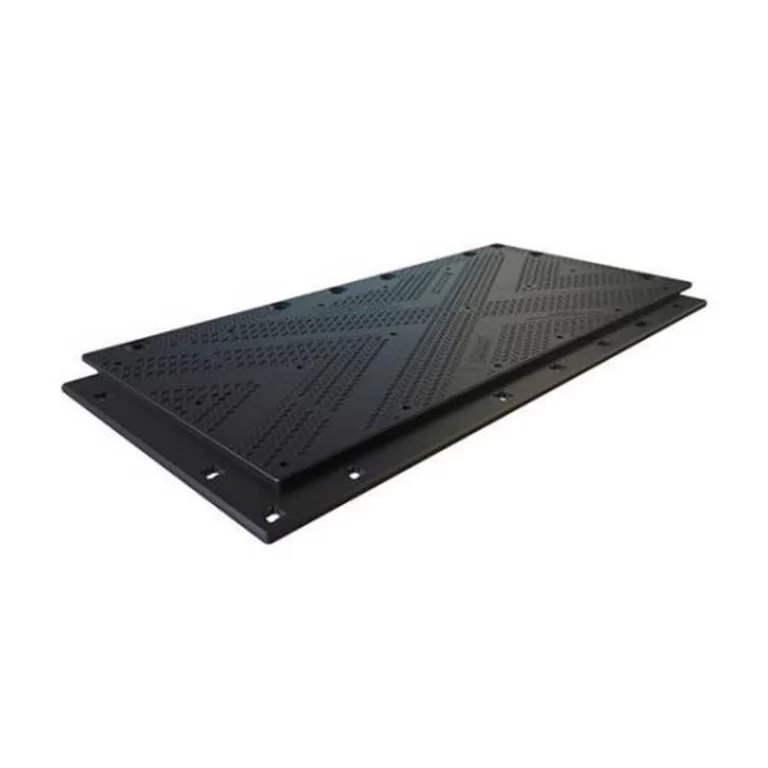
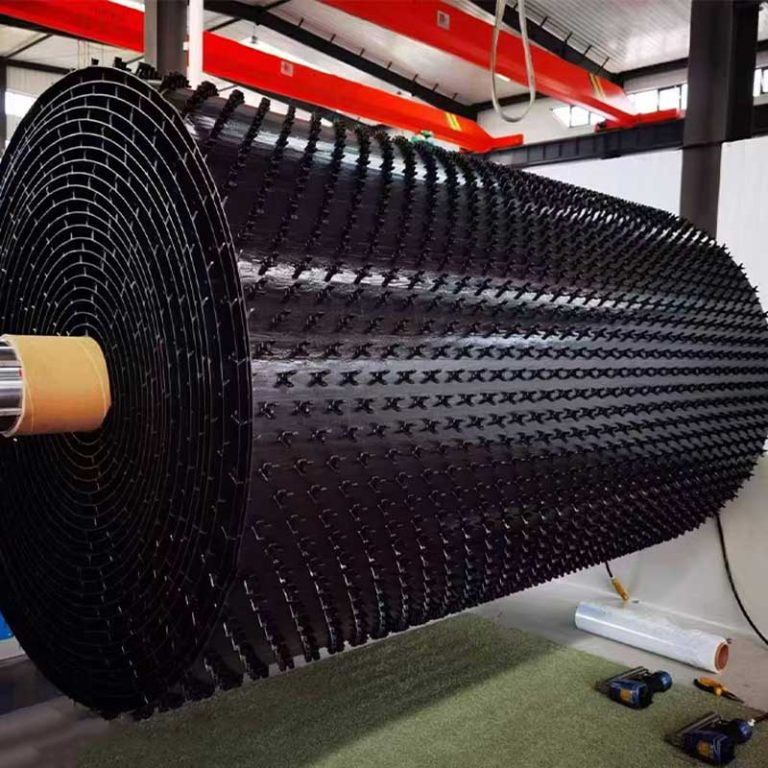
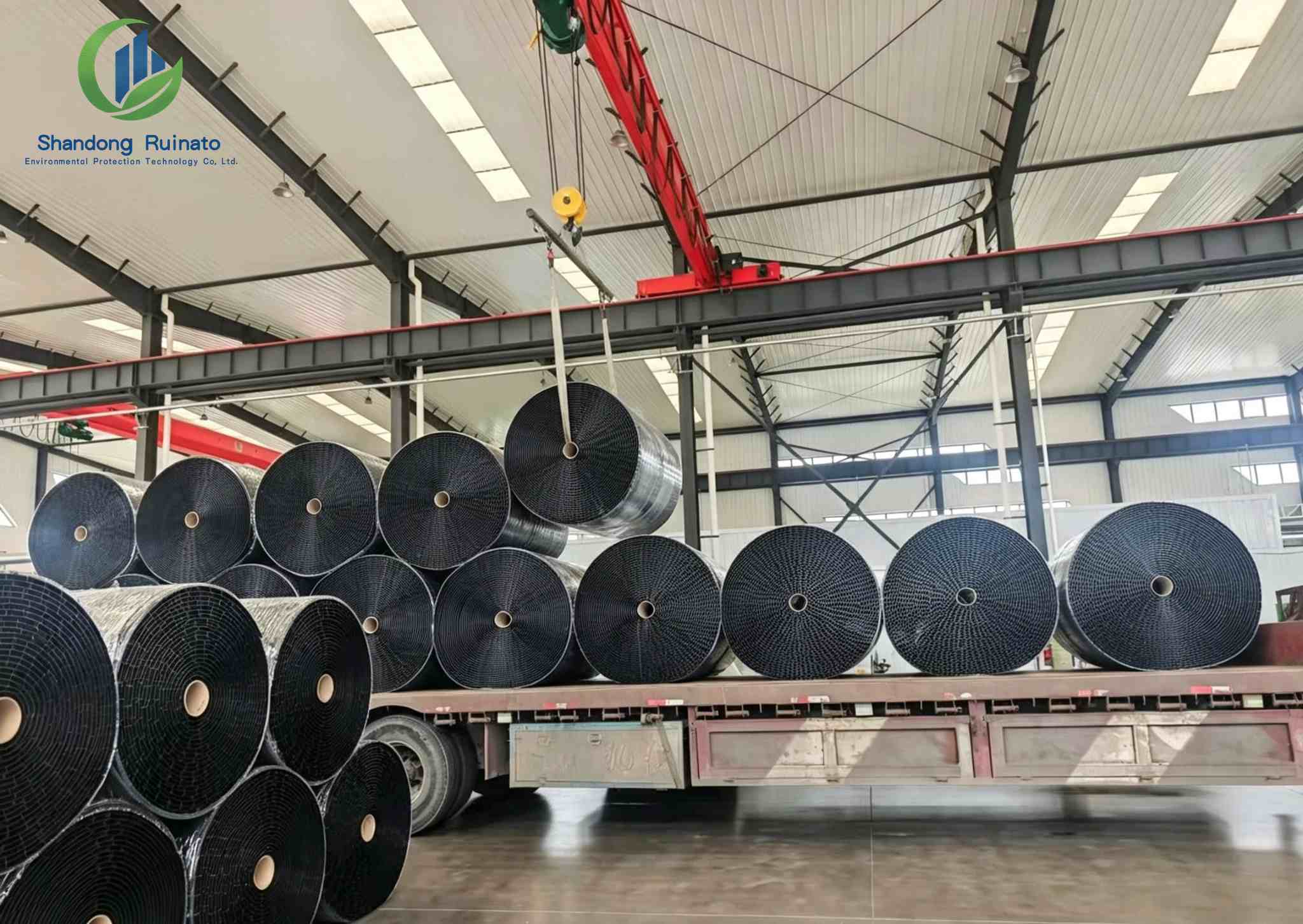
Concrete protective liner is available in different specifications, and the published product information states that the standard banner width is 2,000 mm, with an anchor portion of 1,960 mm. It also states that A4.0 and below are supplied in rolls, while A4.0 and above are supplied as sheets, with other sizes customizable.
For procurement, these details matter because the physical form of the shipment influences packaging and cargo planning.
A buyer should therefore ask for the expected packing dimensions and total shipment volume rather than calculating freight from the net material area alone.
Calculate freight against the actual shipment
The freight calculation should use the information supplied by the forwarder or logistics provider, such as:
- Number of packages;
- Package dimensions;
- Gross weight;
- Total volume;
- Shipping origin;
- Destination port;
- Final delivery location.
A useful unit calculation is:
Landed cost per m² = Total landed shipment cost ÷ Total usable liner area
The denominator should match the commercial quantity being purchased. If a shipment contains different thicknesses or specifications, calculate each group separately rather than averaging unrelated materials.
Full-container and partial-container shipments should not be treated alike
When a shipment does not use the available cargo space efficiently, freight allocated to each square meter can rise. Conversely, combining compatible quantities into one shipment may distribute fixed logistics charges across more material.
The correct approach is not to assume that larger orders always have lower landed cost. Buyers should model the actual shipment configuration.
Which Import Charges Should B2B Buyers Confirm?
After international transportation, imported goods may incur charges determined by the destination country and the shipment’s classification. These costs should be confirmed before the purchase order is finalized.
Duties and tariffs need a destination-specific calculation
The applicable duty rate depends on the customs classification and importing country. The buyer should therefore verify the relevant tariff treatment rather than inserting a generic percentage into the spreadsheet.
The calculation can be represented as:
Landed cost = Product cost + freight + insurance + duties/tariffs + customs charges + inland delivery
Where taxes are recoverable by the importing company, the internal accounting treatment may differ from the cash amount paid at import. That distinction should be agreed with the finance team.
Customs clearance can include more than the duty itself
Import clearance may involve broker charges, documentation fees, port-related charges, inspection-related costs, storage, or other destination expenses. Not every shipment incurs every charge, so the buyer should request a destination-specific estimate.
This is also where the named delivery point matters. A quote delivered to a port is not equivalent to one delivered to the buyer’s warehouse.
Use a landed-cost worksheet
A procurement team can keep the calculation transparent:
| Component | Amount |
|---|---|
| Product value | $_____ |
| Origin-side charges | $_____ |
| International freight | $_____ |
| Insurance | $_____ |
| Import duty/tariff | $_____ |
| Customs clearance | $_____ |
| Inland delivery | $_____ |
| Total landed cost | $_____ |
The worksheet should record the currency, exchange-rate assumption, destination, Incoterm, shipment date or quotation validity, and source of each logistics estimate.
How Can Buyers Compare Landed Cost Across Suppliers?
Once the individual components are visible, supplier comparison becomes much easier. The goal is not to find the lowest number in one quotation column, but to make sure every quotation is converted to the same basis.
Build the comparison around one destination
For example, a buyer can ask each supplier to quote the same liner specification under the same currency and shipment destination. If freight is not included, the procurement team can obtain comparable freight estimates separately.
The comparison might use:
| Supplier | Product | Freight | Import costs | Inland delivery | Landed total |
|---|---|---|---|---|---|
| A | $_____ | $_____ | $_____ | $_____ | $_____ |
| B | $_____ | $_____ | $_____ | $_____ | $_____ |
| C | $_____ | $_____ | $_____ | $_____ | $_____ |
This structure exposes a common issue: a lower product price can be offset by higher freight or less efficient packing.
Record assumptions before approving the purchase
A landed-cost figure is only as reliable as its assumptions. Before issuing the purchase order, confirm:
- Product quantity and specification;
- Price currency;
- Incoterm and named place;
- Packing arrangement;
- Shipment origin;
- Destination port or warehouse;
- Freight quotation validity;
- Duty and customs assumptions;
- Final delivery scope.
The published Concrete Protective Liner information includes multiple material and thickness configurations, so the shipment model should be based on the exact specification being purchased rather than a generic CPL price.
Recalculate when the shipment changes
A revised quantity, different thickness, new packaging arrangement, or changed destination can alter the landed cost. Procurement teams should not carry an old logistics estimate into a new purchase order without checking the underlying assumptions.
This is particularly relevant for repeat international orders where freight rates and customs conditions may change between shipments.

Need Clear Commercial Information for an International CPL Purchase?
Once the destination, shipment quantity, specification, and delivery basis are fixed, the landed-cost model can be checked against the supplier’s quotation and logistics arrangement. Shandong Ruinato Environmental Protection Technology Co., Ltd. manufactures engineering plastic materials and environmental protection products for international industrial applications. Its Concrete Protective Liner (CPL) is produced in different thickness and configuration options, with the published range including Type A anchor heights of 13 mm and Type B anchor heights of 19 mm. The company states that A4.0 and below are supplied in rolls while A4.0 and above are supplied as sheets, with customized sizes available. For an import quotation, confirming specification, packing form, shipment quantity, Incoterm, destination, and logistics responsibility provides a clearer commercial basis.
Conclusion
For B2B buyers, the landed cost of concrete protective liner should be calculated from the agreed commercial handover point through final delivery. Product price, Incoterms, packaging, shipment volume, freight, insurance, duties, customs clearance, and inland transportation can all change the final amount paid to receive the goods. Keeping installation, welding, maintenance, and lifecycle expenses outside this calculation preserves a clear import-cost comparison. Before approving an order, buyers should convert supplier quotations to the same destination basis and document every assumption used in the calculation.
FAQs
1. Is landed cost the same as the supplier’s quoted unit price?
No. The quoted unit price covers only the commercial scope defined by the supplier and Incoterm. Landed cost adds the applicable logistics, import, clearance, and inland delivery expenses required to bring the goods to the agreed destination.
2. Does EXW usually require more cost calculation from the buyer?
EXW can place more logistics responsibilities on the buyer from the seller’s premises onward. The buyer should calculate pickup, export handling, freight, insurance, import charges, customs clearance, and inland delivery according to the actual transaction.
3. Should customs duties be included in landed cost?
Yes, when the calculation is intended to represent the cost of importing the goods. The applicable amount should be confirmed for the destination country and customs classification rather than estimated from a generic rate.
4. Why does packaging affect liner landed cost?
Packaging determines shipment dimensions, weight, and cargo utilization. Because freight is related to the physical shipment, differences in packing format can change the logistics cost allocated to each square meter.
5. How should two CPL quotations with different Incoterms be compared?
Convert both quotations to the same destination and commercial basis. Add the logistics and import costs that are excluded from each offer, then compare the resulting landed totals rather than comparing the original unit prices.